.avif)
Legal Update – Supreme Court Rules Trump’s IEEPA Tariffs Unconstitutional
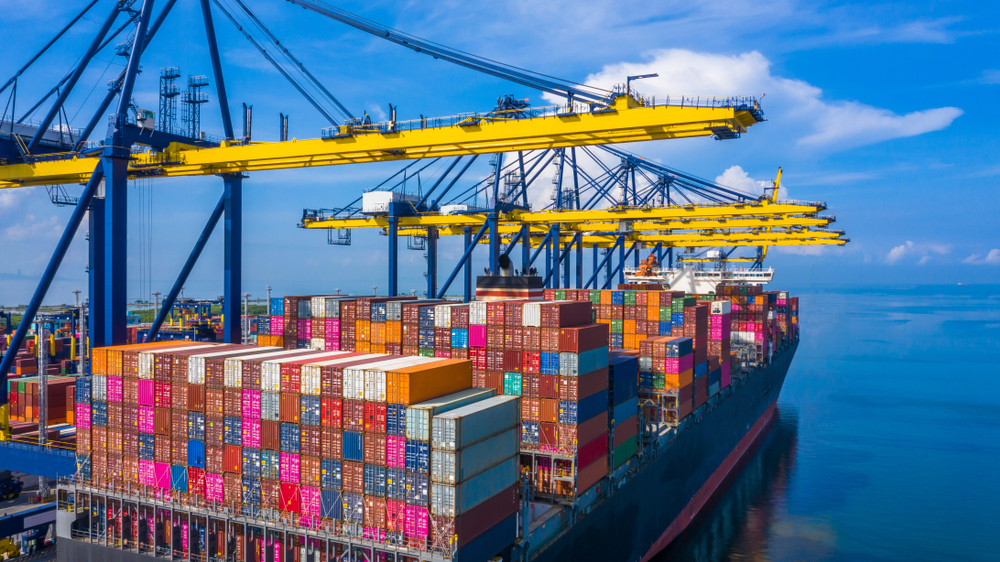
In a landmark ruling, the U.S. Supreme Court rejected President Trump’s sweeping tariffs, holding that the International Emergency Economic Powers Act1 (IEEPA) does not authorize the President to impose tariffs. The Court delivered its opinion on the consolidated cases of Learning Resources, Inc. v. Trump and V.O.S. Selections v. Trump and upheld the conclusion from lower court ruling that the Presidential power to impose tariffs exceeds the authority granted by the Congress under IEEPA, a 1977 statute traditionally used as an authority for the imposition of U.S. sanctions against particular jurisdictions as well as legal and natural persons. As a result of the Supreme Court’s ruling, U.S. importers could potentially collect refunds on excess tariffs paid, with reports suggesting over $175 billion having been paid in such additional tariffs.2
Context
President Trump, on April 2, 2025, announced what was referred to as “Liberation Day” tariffs – with the Administration imposing a blanket 10% tariff on all countries, and then followed by individualized reciprocal tariffs on 86 countries, ranging from 11% to 50%. These were issued under the authority of Executive Order (E.O.) 14257. The Liberation Day tariffs also included a 25% duty on most Canadian and Mexican imports, and a10% duty on most Chinese imports in response to a national emergency created by prevalent drug trafficking involving that country. Liberation Day tariffs went into effect in early April 2025.
The IEEPA has been historically been historically used as a basis to impose sanctions, including country-wide embargoes such those on Iran and North Korea, and also so-called “blocking programs,” such as those seen in the Global Magnitsky and Russia sanctions. President Trump’s use of the tariffs under IEEPA spurred a series of new U.S. bilateral trade agreements, such as the ones with the United Kingdom and the European Union.
Following imposition of tariffs pursuant to IEEPA, numerous businesses filed suit challenging the new rates. The Learning Resources plaintiffs sued the Trump Administration in the U.S. District Court for the District of Columbia (D.D.C.). Separately, five small businesses, forming the V.O.S. Selections plaintiffs, filed suit in the Court of International Trade (“CIT”) on a similar basis. The CIT granted summary judgment to plaintiffs, holding that both the reciprocal tariffs and drug-trafficking tariffs exceed the President’s authority under the IEEPA. The Government appealed, and the Federal Circuit affirmed the CIT’s ruling that IEEPA’s grant of authority to “regulate…importation” did not authorize the sweeping tariffs. The case was then appealed to the Supreme Court.
In a 6-3 decision, the Supreme Court held that the IEEPA had never in its near-50-year existence been used for tariffs, and instead tariffs have been imposed under other authorities. The Court affirmed the ruling in the V.O.S. Selection case and vacated the judgement in the Learning Resources case and remanded it back to the District Court for lack of jurisdiction as the Court agrees with the CIT that the CIT, as an Article III court, holds exclusive jurisdiction over challenges that “arise out of modifications to the HTSUS”, referring to the U.S. Harmonized Tariff Schedule, which determines applicable tariff rates and tariff rate quotas (TRQs).
Chief Justice Roberts wrote in the majority opinion that the Constitution grants Congress alone the power to impose taxes, including import duties. The statutory text of IEEPA “regulate…importation” does not constitute a delegation of power to the President to impose tariffs. Additionally, the opinion cited legislative practices that historically, when Congress has delegated its tariff powers, the delegation will would be in “explicit terms” and with “careful constraints.”
In response, the President immediately shifted to Section 122 of the Trade Act of 1974, imposing a new temporary worldwide tariff of at least 10% to replace the IEEPA tariffs now found unlawful.
Key Takeaways
- Importers that paid higher tariffs due to Liberation Day tariffs imposed pursuant to the IEEPA could potentially collect past “overpayments” they made from the government. Importers may wish to determine their eligibility for refunds on excess tariffs paid during the effective period of the Liberation Day tariffs and file suit at the CIT as necessary. Hundreds of suits were have already been filed before the SCOTUS ruling and it can be expected many more will follow at the CIT as importers rush to claim refunds before the two-year statute of limitations expires.3
- Uncertainty remains with respect to the ability and practicality of collecting such refunds and the process it would entail. According to a previous estimate, the refunds could amount to as much as $175 billion. However, the Supreme Court’s ruling does not provide guidance on whether refunds for past payments are warranted. Justice Kavanaugh, in his dissenting opinion, noted that “refunds of billions of dollars would have significant consequences for the U.S. Treasury,” and that a refund process could be complex and time-consuming.
U.S. importers are strongly advised to monitor the development of duties rates applicable to their products given their HTS codes as well as their country of origin. It is likely that some tariffs will be reimposed under a different statutory authority (i.e. the 1974 Trade Act) and President Trump almost immediately after the SCOTUS decision announced the imposition of a global 10% tariff on virtually all imported goods. Such tariffs, even if held constitutional, would not invalidate any eligibility for refunds on Liberation Day tariff payments.
Please contact Farhad Alavi (Washington) at falavi@akrivislaw.com or Sam Amir Toossi (New York) at atoossi@akrivislaw.com, if you have any questions.
Special thanks to Kristen Xiao for her help with this Legal Update.
This Legal Update is intended solely for informational purposes and should in no way be construed as legal advice, nor shall the information shared here result in or constitute the formation of an attorney-client relationship with anyone whoreads it. If you have any questions or are unclear on any of the subject matters addressed or discussed in this Legal Update, please consult a licensed legal professional.
1 50 U.S.C. §§ 1701-1705.
2 Reuters. See Reuters,https://www.reuters.com/world/us-tariff-revenue-risk-supreme-court-ruling-tops-175-billion-penn-wharton-2026-02-20/;.see also Wharton School of the University of Pennsylvania, https://budgetmodel.wharton.upenn.edu/issues/2026/2/20/supreme-court-tariff-ruling-ieepa-revenue-and-potential-refunds.
3 28 U.S.C. §2636(i).